Most Shopify teams are stuck in the same loop right now. Traffic gets more expensive, conversion pressure goes up, and the fastest way to hit the number is another promotion. Then the next one has to be a little louder, a little broader, or a little cheaper to get the same response.
That cycle feels productive because it produces spikes. It also teaches customers exactly how to shop your store. Wait. Ignore full-price offers. Come back when the banner changes.
Urgency marketing can help, but only if you stop treating it like a countdown timer problem. The brands that protect margin and brand equity use urgency with more precision. They align it to real shopper behavior, real constraints, and real moments of intent.
The Promotion Treadmill Is Broken
Monday starts with a 15% off campaign. By Thursday, conversion softens, so the banner changes to 20% off with a tighter deadline. A week later, the same customers are still on the list, still browsing, and even less willing to buy at full price.
That pattern shows up on a lot of Shopify stores because promotions create fast feedback. Revenue spikes. The dashboard looks healthier. The team gets proof that the tactic worked.
Then the bill comes due.
Repeated discounts train shoppers to delay purchases, compress margin, and treat your regular price as temporary. The short-term lift is real, but so is the long-term damage to price integrity. Once customers expect a better offer next week, urgency stops creating action and starts creating skepticism.
The core issue is predictability. If shoppers can guess what the next promotion will be, they can also guess that waiting is the smarter move. That is a dangerous lesson to teach, especially for brands that need repeat purchases without turning every send into a markdown event. For a closer explanation of the buyer psychology behind this behavior, see Quikly’s analysis of why urgency causes action.
Why more promotions stop helping
Promotions still have a place. Clearance inventory, seasonal transitions, and customer reactivation can justify them. But the trade-off changes when discounting becomes the default response to soft conversion.
On Shopify, the warning signs are easy to spot:
- Sitewide discount dependence: The same percentage-off offer appears so often that shoppers assume another one is coming.
- PDP urgency overload: Product pages stack low-stock notices, expiring offers, and timers in ways that feel scripted rather than credible.
- Campaign cannibalization: Email, SMS, paid social, and onsite messaging all push the same sale, which strips the offer of context and makes it feel manufactured.
These tactics do not fail because urgency is flawed. They fail because generic urgency loses force with repetition.
Strong urgency protects margin by giving high-intent shoppers a reason to act without retraining the whole customer base to wait for discounts. It also protects brand equity, because the message is tied to a real constraint, a real behavior, or a real moment of intent instead of another storewide price cut.
Why Urgency Drives Action A Look at Behavioral Psychology
Urgency works because it aligns with how people make purchase decisions under uncertainty. Shoppers rarely need more information forever. More often, they need a reason to stop browsing and act.

Urgency marketing uses that moment. A deeper breakdown of those consumer triggers appears in Quikly’s post on why urgency causes action.
Scarcity bias changes perceived value
When something feels limited, people tend to value it more. That’s scarcity bias. In ecommerce, that can be a limited product run, a shipping cutoff, or access to a reward that won’t stay available forever.
This isn’t about making shoppers panic. It’s about making opportunity visible.
A shopper who was already interested may need a clear reason to decide now instead of later. Scarcity gives the decision shape.
Loss aversion is stronger than most brands account for
People generally feel the pain of missing something more sharply than the satisfaction of gaining the same thing. That’s loss aversion.
A message like “free next business day delivery if you order before the cutoff” works because the shopper can picture what they lose by waiting. Not in an abstract way. In a practical one.
Good urgency marketing doesn’t create desire from nothing. It sharpens an existing decision.
Temporal discounting favors immediate rewards
People tend to prefer immediate benefits over delayed ones. That’s temporal discounting. If the reward is relevant and timely, action feels easier.
On Shopify, this is why urgency often works better when the incentive connects to the buying moment:
| Behavioral principle | What the shopper feels | Useful Shopify expression |
|---|---|---|
| Scarcity bias | ”This may not be available later” | Limited inventory, limited access |
| Loss aversion | ”I don’t want to miss this benefit” | Shipping cutoff, expiring reward |
| Temporal discounting | ”There’s value in acting now” | Immediate unlock, same-session incentive |
Used well, urgency marketing isn’t manipulation. It’s decision support. It reduces drift for shoppers who are already close.
Where Most Urgency Marketing Goes Wrong
The most common mistake is treating urgency like a design element instead of a strategic tool. Add a timer. Add a low-stock badge. Add a popup with an expiring offer. Then repeat it on every page for every visitor.
Sometimes that produces a short-term lift. It also creates a trust problem.
Generic urgency burns out faster than teams expect
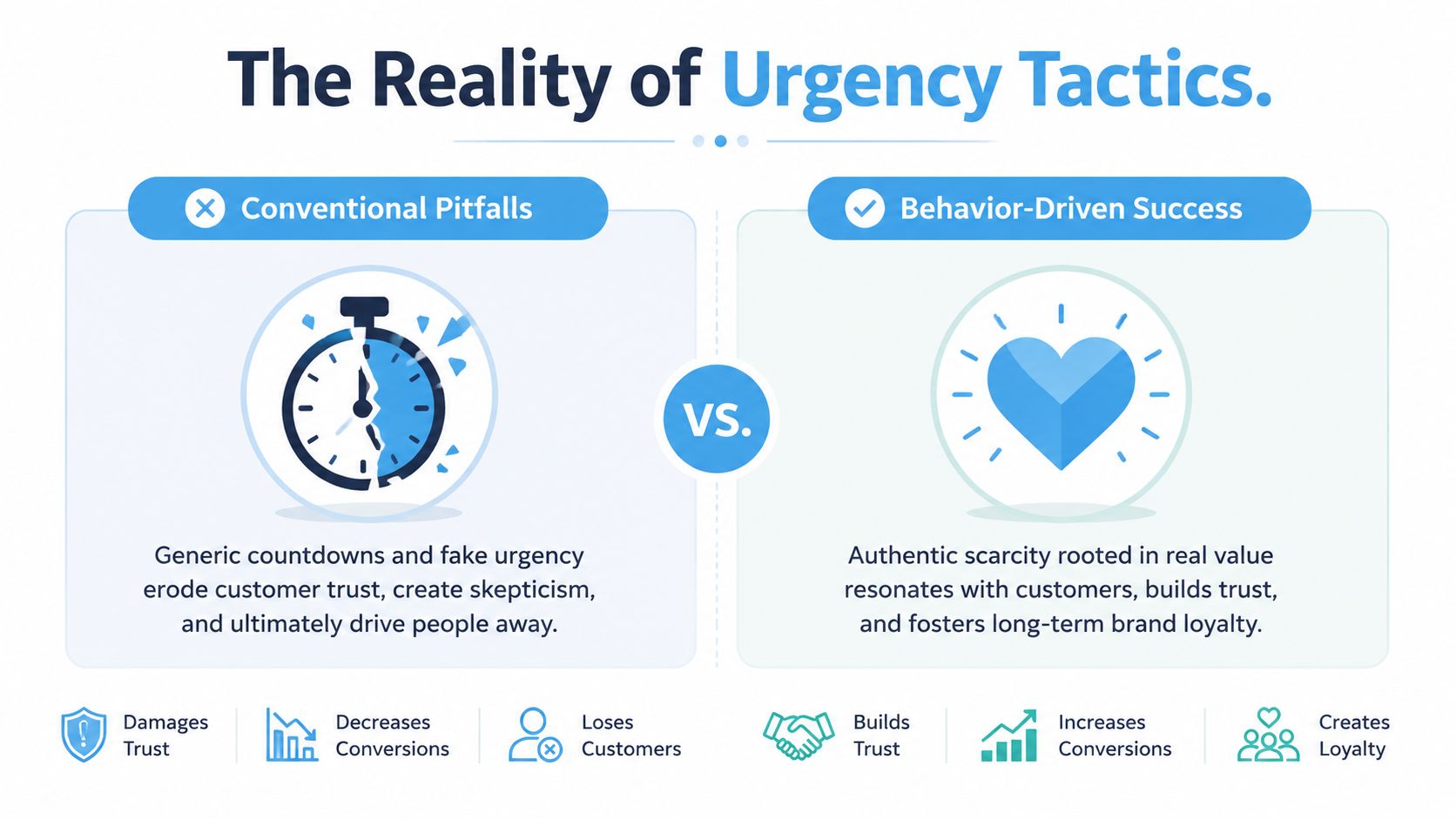
Brands have reported diminishing returns from predictable promotional cycles, as customers learn to wait for the next sale instead of responding immediately, according to Socius Marketing’s discussion of urgency and scarcity campaigns. That’s the central problem with generic urgency tactics. They teach the audience to decode the mechanic.
A countdown timer can be effective in the right context. Research summarized by Growbo says timers on product pages increased conversions by 332%, and pairing them with social proof can push results up to 40% above baseline in some implementations, according to Growbo’s review of urgency tactics. But those results don’t mean every timer is a good idea.
A timer tied to a real event can help. A timer attached to every product, every day, trains skepticism.
The wrong signal at the wrong moment hurts trust
Not every shopper needs urgency. A first-time visitor on a high-consideration product may still be deciding whether your brand is credible. Hitting that person with aggressive scarcity language can create friction instead of momentum.
Three bad patterns show up constantly on Shopify stores:
- Always-on countdowns: If the timer resets on refresh or appears permanently, shoppers notice.
- Blanket low-stock claims: “Only a few left” across a broad catalog feels scripted unless inventory reality supports it.
- Discount-first urgency: The offer becomes the product. Customers stop evaluating value and start evaluating timing.
If urgency only works when customers believe your pressure, then fake pressure is one of the fastest ways to weaken the tactic.
Margin damage usually arrives before teams admit it
A store can post better promo-period revenue and still weaken the business. If urgency depends on broader discounts every month, you’re borrowing from future demand.
That creates at least three costs:
| Short-term tactic | Immediate effect | Longer-term cost |
|---|---|---|
| Frequent sitewide discounts | More orders during campaign windows | Lower margin and weaker full-price behavior |
| Persistent urgency overlays | More attention on promotion | Lower trust and more message blindness |
| Universal discount exposure | Fast reach across all traffic | Wasted incentives on shoppers who may have converted anyway |
The issue isn’t urgency itself. It’s undisciplined exposure.
A Smarter Framework for Driving Action
Better urgency marketing starts with restraint. Not every visitor should see the same message. Not every incentive should be automatic. Not every promotion should take the form of a discount.
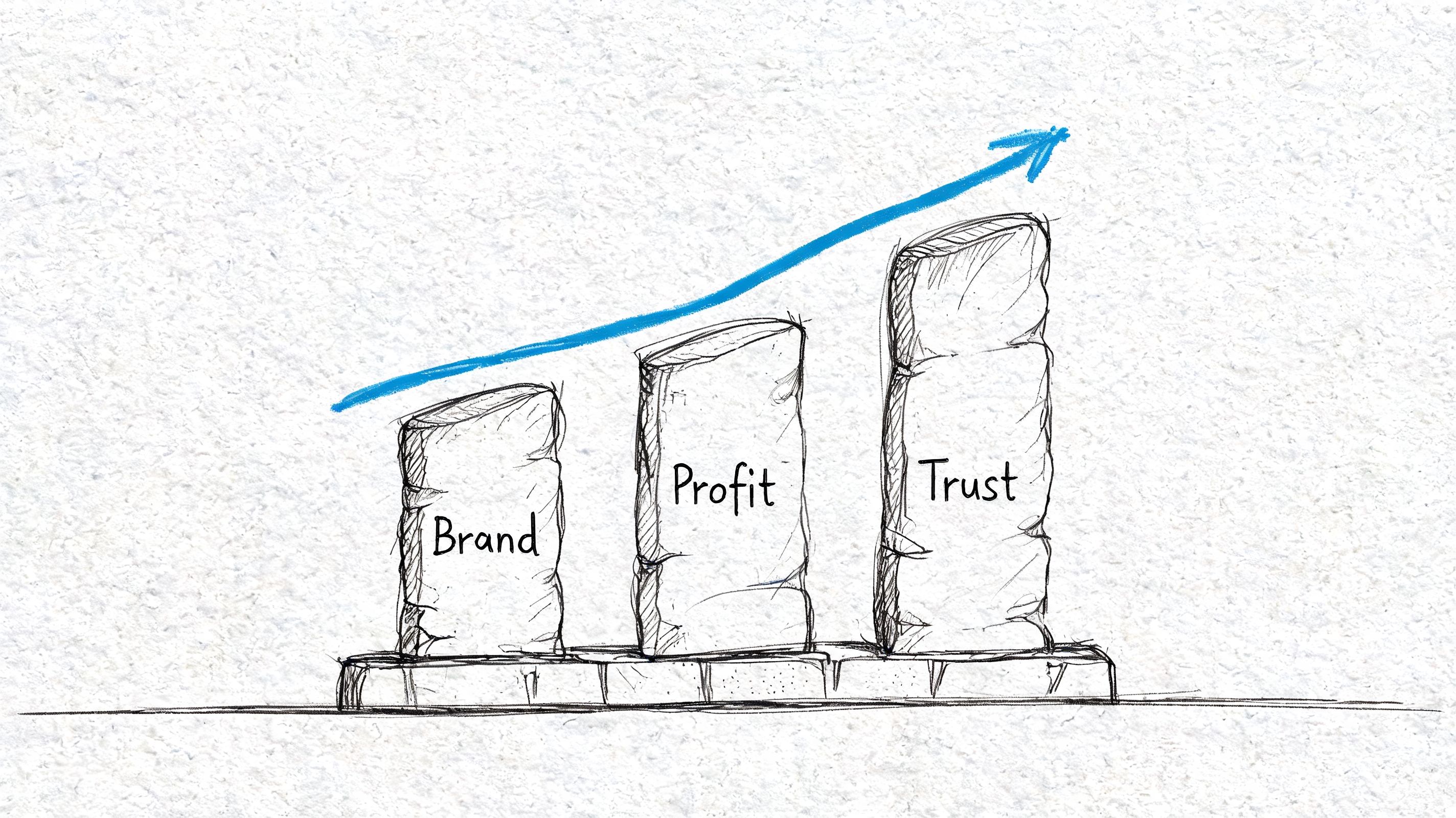
The framework that holds up over time has three parts.
Controlled exposure
Show urgency only where intent or context justifies it. That’s how you avoid wasting incentives and avoid turning your store into a wall of pressure.
Customer lifecycle matters here. Marketing Nice Guys notes that repeat customers may respond better to limited-stock messaging on products they’ve viewed before, while new leads may respond better to time-limited welcome offers. The takeaway isn’t just “segment your audience.” It’s that urgency should match what the shopper already knows and wants.
A returning customer who has visited the same PDP twice is different from a cold visitor from paid social. Your onsite messaging should reflect that.
Earned incentives
The weakest version of urgency pushes a discount at passive traffic. A stronger version asks the shopper to do something to access value.
That action could be engaging with a launch, claiming an offer within a defined window, or participating in a reward structure that changes based on timing or availability. The psychology matters. People value what they actively pursue more than what gets dumped on them.
The goal isn’t to make rewards harder to get. It’s to make them feel intentional.
Earned incentives also help protect margin because you control exposure instead of broadcasting the same offer to everyone.
Real scarcity
Scarcity has to be believable. Better than believable, it should be true.
Use real constraints:
- Inventory reality
- Shipping deadlines
- Access windows
- Limited promotional quantities
Avoid made-up urgency that customers can disprove with one refresh or one return visit.
When urgency comes from something operationally real, your message carries more weight and your brand keeps its credibility.
How to Implement Behavior-Driven Urgency on Shopify
Urgency marketing is often reduced to an app install and a timer block. Shopify can do much more than that if you use actual behavior signals.
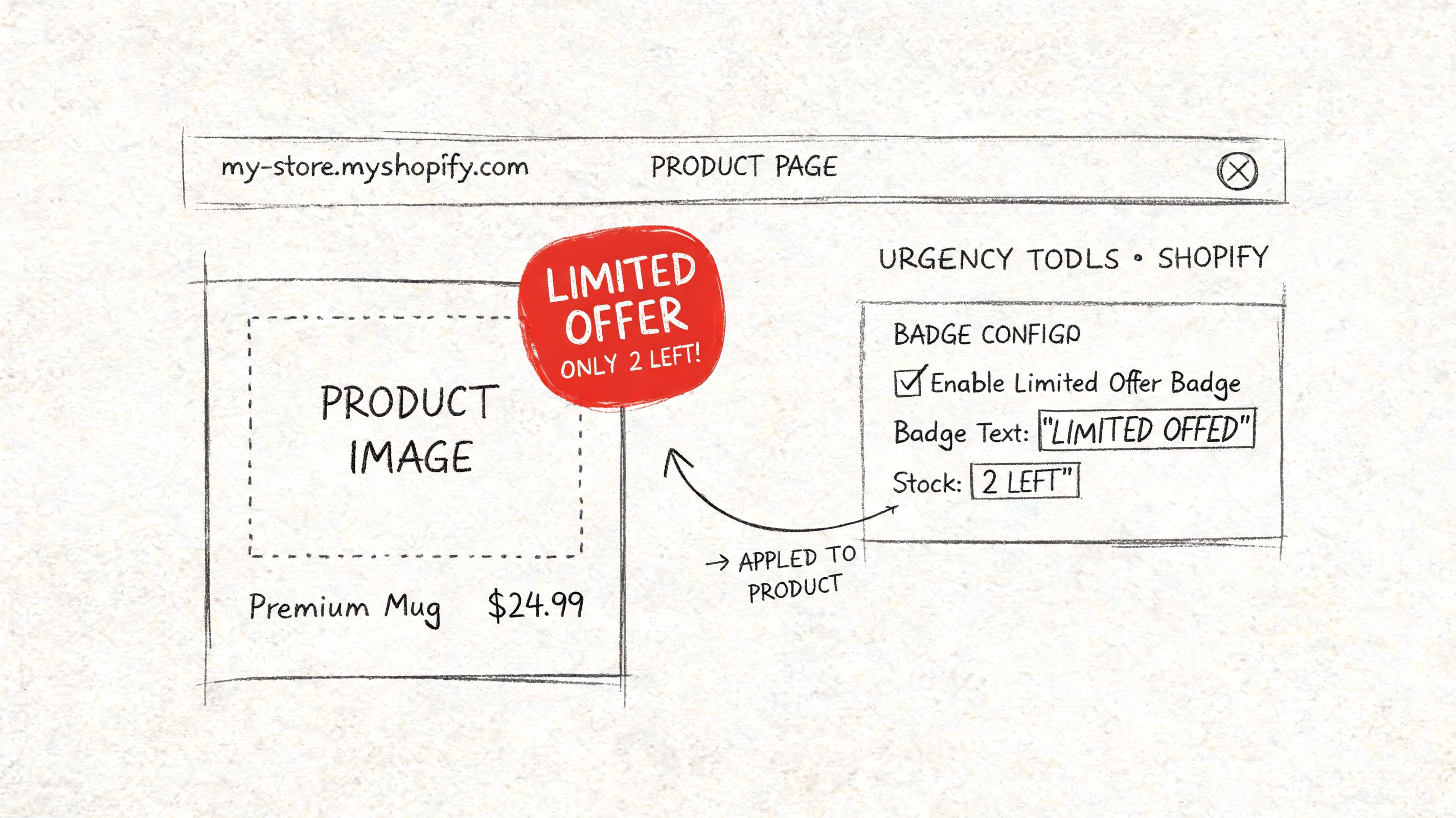
The cleanest implementation starts with a narrow use case. A shopper visits a product page, lingers, returns, or reaches a point in the session that suggests real intent. Then the store responds with a relevant urgency message or incentive.
Start with one trigger you can defend
A useful example comes from Speero. Their test of a precision-timed message, “Free next business day delivery if you order before 4 PM,” shown only to relevant users before the cutoff, produced a 27.1% revenue uplift, according to Speero’s urgency case study. The message wasn’t generic. It appeared only when the promise was true and useful.
That same logic works well on Shopify when you connect urgency to:
- Shipping cutoffs: Especially for gifts, perishables, or fast-fulfillment categories
- Known product interest: Returning visitors, cart builders, or shoppers spending meaningful time on a PDP
- Inventory pressure: Real low-stock conditions, not universal badges
- Access windows: Product drops, VIP windows, or campaign-specific claims
A more detailed breakdown of these patterns is covered in Quikly’s guide to Shopify urgency tactics.
Use your Shopify stack like a system
Behavior-driven urgency works best when your tools share context. On Shopify, that usually means coordinating theme logic, discount rules, and messaging channels instead of treating each surface separately.
A practical setup often looks like this:
| Shopify layer | What to configure | Why it matters |
|---|---|---|
| Theme and PDP messaging | Show urgency only when conditions are true | Keeps the signal credible |
| Discount infrastructure | Limit eligibility and exposure | Protects margin |
| Email or SMS flows | Follow up based on behavior, not calendar alone | Extends urgency without blasting everyone |
Quikly is one option merchants use for this kind of behavior-driven promotion on Shopify. It focuses on psychology-backed promotional experiences that shoppers actively participate in, rather than passive blanket discounts or generic timer overlays.
Keep the message operationally true
This sounds obvious, but a lot of urgency campaigns fail here. If your promotion team can’t explain why a message is appearing to this user, at this time, on this product, the campaign probably isn’t tight enough.
That standard helps with more than compliance and trust. It forces better merchandising decisions.
Measuring What Matters Profit, Not Just Purchases
Monday morning looks great in the dashboard. Orders jumped over the weekend, conversion rate climbed, and the urgency campaign appears to have worked.
Then finance closes the loop. Discount cost ran higher than expected, a chunk of those orders came from customers who likely would have purchased anyway, and the next full-price week softens. The campaign drove action, but it did not improve the business.
That is the measurement problem with urgency marketing. Purchase volume is visible fast. Profit quality takes more discipline to evaluate.
The standard is straightforward: did the campaign create incremental, profitable demand without training customers to wait for the next prompt?
What to track instead
A useful scorecard includes four measures:
- Gross margin per promotion: Revenue matters, but contribution after discounts, shipping, and product mix matters more.
- Incremental lift: Separate net new demand from orders you pulled forward by a few days.
- Post-promotion full-price rate: Watch whether customers return at full price or disappear until the next offer.
- Customer value over time: Track whether repeated urgency improves buying frequency and retention, or weakens price integrity.
Revenue spikes are easy to celebrate. Margin quality is harder to fake.
Speed also belongs in the analysis. As noted earlier, even small performance delays can cut conversion enough to erase the gain from an urgency tactic. If a countdown script, modal, or promotional app adds friction to the page, the campaign can hurt both profit and brand perception.
One of the best post-campaign habits is to compare buyer groups, not just campaign totals. Look at new versus returning customers. Look at high-intent product viewers versus casual traffic. Look at customers exposed once versus customers who saw the message multiple times. That is where you find out whether urgency improved decision-making or just subsidized demand.
For teams refining their promotional model, this broader perspective on how ecommerce promotions affect margin and customer behavior is a useful complement to campaign reporting.
Ask harder post-campaign questions
Review each campaign like an operator, not a copywriter.
Did the incentive reach shoppers who needed a reason to act, or loyal customers who would have converted without it? Did AOV rise because the promotion improved basket composition, or fall because shoppers traded down? Did repeat exposure increase response, or signal that the brand asks for urgency too often?
Those answers tell you whether urgency is strengthening commercial efficiency or undermining it. That distinction is what protects margin and keeps the brand from slipping into permanent promotion mode.
Stop Discounting, Start Engaging
The future of urgency marketing on Shopify isn’t louder pressure. It’s better timing, better targeting, and better reasons to act.
Generic urgency tactics flatten your brand over time. They erode trust, compress margin, and teach customers to wait. Behavior-driven urgency does the opposite. It meets shoppers when intent is real, gives them a relevant reason to move, and keeps the promotional experience aligned with how your brand wants to be perceived.
If your current approach depends on showing the same offer to everyone, that’s the first thing to change. A better promotional system doesn’t ask how often you can discount. It asks how precisely you can motivate action.
For a broader look at that shift, Quikly’s article on ecommerce promotions is a useful next read.
If you’re evaluating how to make promotions work harder without leaning on broader discounting, Quikly is built around that problem. It helps Shopify brands run behavior-driven promotional experiences that increase purchase action while protecting margin and brand perception.
Topics: Urgency Marketing, ecommerce conversion, shopify marketing