Most advice about the benefits of online store growth starts with the same promise: reach more people, stay open around the clock, and offer bigger discounts. That advice is incomplete. More traffic doesn’t fix a checkout that feels unreliable, and deeper promotions can increase orders while undermining margin and teaching customers to wait.
For Shopify brands, the stronger advantage is control. A digital storefront lets you test merchandising, identify where intent disappears, make fulfillment expectations visible, and create offers that encourage action without treating every shopper to the same price cut. The store becomes an operating system for demand, trust, and profitable experimentation.
The Real Value of a Digital Storefront
An online store isn’t merely a catalog with a payment button. It gives a merchant visibility into the buying environment that a physical location rarely provides at the same speed or granularity. You can see which product page attracts attention, which offer creates hesitation, where checkout exits occur, and whether a promotion increases basket size or only reduces the amount customers pay.
That changes the growth question. Instead of asking only how to bring more visitors to the Shopify store, operators can ask which visitors already show intent and what prevents them from completing the purchase. A better product comparison, clearer delivery language, guest checkout, or a more credible offer can improve the value of traffic already acquired.
Growth requires control, not constant discounting
The familiar ecommerce loop is expensive: buy traffic, apply a discount, watch conversion, then repeat with a deeper discount when performance softens. Over time, customers learn the pattern. They postpone the purchase because an automatic sale feels likely to return, while the brand absorbs the cost through lower gross margin and weaker price perception.
A digital storefront gives you alternatives. You can test a bundle against a single product, present a reward to shoppers who act within a real window, or make an incentive available to a defined group rather than publishing a permanent markdown across the catalog. These tests let the team distinguish conversion improvement from revenue that was merely purchased through a larger discount.
Practical rule: Treat every promotion as a behavioral experiment. Measure what changed in conversion, average order value, margin, and repeat behavior, not just topline sales.
The storefront also carries the brand experience. Product education, reviews, inventory signals, shipping promises, returns, and payment choices all contribute to whether a shopper trusts the transaction. Quikly’s discussion of what brand experience means in ecommerce is useful context because the promotional moment has to fit the broader experience, not interrupt it.
The store can extend the relationship
An online store can continue working after the first purchase through email, SMS, product education, replenishment reminders, and post-purchase service. Those channels don’t automatically create loyalty, but they give the merchant a structured way to learn from behavior and communicate with customers based on what they viewed or bought.
That same infrastructure can support a local strategy alongside a broader one. A brand that wants physical discovery, community participation, or regional demand can explore how to join a local marketplace without abandoning its direct storefront. The point isn’t to choose one channel forever. It’s to understand which channel creates trust and profitable demand for each customer context.
The genuine benefit of an online store is therefore control over the buying environment. It can help a brand capture demand, test decisions, and protect perceived value, but only when the team treats the store as an operating system rather than a passive product shelf.
Expanding Market Reach Beyond Physical Boundaries
The geographic case for ecommerce is substantial. Across 45 developed and developing economies, business e-commerce sales reached approximately $28 trillion in 2024, up 4.4% from 2023, according to UN Trade and Development data. The economies represented account for roughly three-quarters of global gross domestic product and exports, and the United States, Europe, and China are identified as the largest ecommerce markets.
For a Shopify merchant, that scale explains why an online store can become more than a local sales aid. A digital storefront can present products beyond one shopping district, accept demand outside normal store hours, and support multiple markets without requiring a new physical location for every audience. Centralized product information, checkout, analytics, and marketing make geographic expansion operationally possible.
The United States shows the same structural change from another angle. Ecommerce represented 8.0% of total retail sales in 2016 and 16.1% in 2024, while total U.S. retail ecommerce sales reached $1,192.6 billion in 2024, according to the U.S. Census Bureau historical ecommerce series. The online share approximately doubled across that period, which supports treating a digital storefront as a primary revenue channel rather than a side project.
Reach creates a fulfillment obligation
The mistake is to confuse market access with market readiness. A translated product page doesn’t solve a customer’s concern about delivery timing, duties, payment methods, returns, or the environmental cost of fulfillment. When the store expands into a new country, it exposes the brand to that market’s expectations immediately.
DHL’s 2025 survey of 24,000 consumers across Europe, the Americas, Asia-Pacific, Africa, and the Middle East found that 81% would abandon a purchase if their preferred delivery option wasn’t available, while 79% would abandon if preferred return options were missing. The figures appear in the DHL ecommerce trends findings.
That creates a practical expansion test:
- Delivery clarity: Show available delivery methods, timing, and cost before the shopper reaches the final payment step.
- Payment localization: Offer methods customers in the target market recognize and trust.
- Returns visibility: Explain eligibility, process, timing, and responsibility for return shipping without forcing customers to search.
- Sustainability information: Make relevant packaging and delivery choices visible, particularly where environmental concerns influence purchase confidence.
Promotional urgency can’t repair unclear fulfillment. A countdown may encourage action from a shopper who trusts the store, but it won’t compensate for a delivery promise that feels vague or unsuitable. Before sending more traffic through a Shopify store traffic plan, make sure the store can keep the promise that traffic creates.
Lowering Overhead While Increasing Margin Control
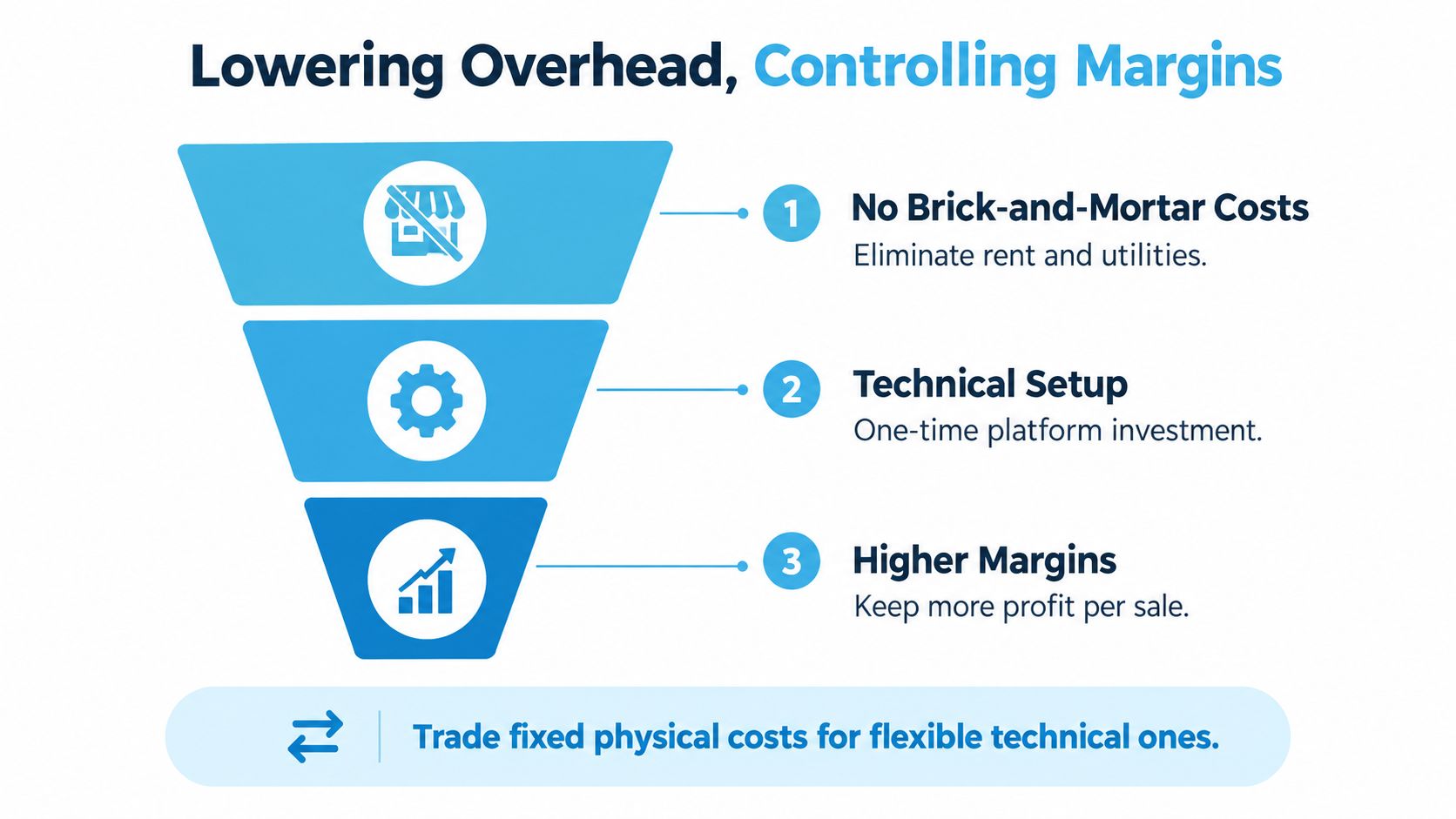
An online store can remove expenses associated with a physical sales floor, but it doesn’t make selling costless. It swaps some fixed physical costs for technical, operational, fulfillment, and acquisition costs. Margin control depends on managing that new cost structure deliberately.
The clearest example is checkout. Baymard’s research combines 272 moderated usability sessions, eye-tracking studies, more than 850 benchmarked checkout steps, and nine quantitative studies involving 11,777 participants. Its current benchmark places average cart abandonment at 70.19%, and 17% of U.S. online shoppers report abandoning an order because checkout was too long or complicated. The details are documented in Baymard’s checkout usability research.
Acquiring a visitor is only part of the cost equation. If a shopper reaches the cart and exits because the form is confusing, the brand has paid to create intent without collecting the order. Buying more traffic won’t solve that loss.
Engineer the transaction
A low-friction Shopify checkout should make the next action obvious and protect the customer’s progress. Baymard identifies an ideal checkout of approximately 12 form elements, made up of seven fields, two checkboxes, two dropdowns, and one radio-button interface. That benchmark isn’t a command to copy every layout exactly, but it gives teams a useful constraint when auditing unnecessary inputs.
Prioritize the mechanics that preserve commercial value:
- Guest checkout: Don’t force account creation before purchase. In Baymard’s survey of 1,026 recent U.S. online shoppers, 18% said they abandoned an order because they didn’t want to create an account, as reported in Baymard’s current checkout UX research.
- Early cost visibility: Show shipping, taxes where possible, and the final payable total before the shopper commits.
- Inline validation: Explain an error beside the field that caused it instead of clearing the form or presenting a generic failure.
- Cart preservation: Keep products, selections, and promotional eligibility intact when a shopper returns.
- Mobile controls: Use input types and layouts that make address and payment entry practical on a phone.
Technical reliability matters just as much. Baymard observed technical failures such as unresponsive servers and error pages causing immediate abandonment in eight of nine observed instances, while 65% of sites had checkout performance rated mediocre or worse, according to its cart abandonment research.
Instrument the checkout by step, including address, shipping, payment, review, and confirmation. When a campaign underperforms, this view helps you separate shopper hesitation from a failed request, slow authorization, inventory mismatch, or broken discount logic. That distinction protects margin because it stops the team from responding to a technical problem with a larger discount.
Accelerating Testing and Data-Driven Optimization
Physical retail makes experimentation expensive. A new layout can require fixtures, labor, signage, and operational disruption. Shopify gives a brand a more adaptable environment, where teams can change merchandising, messaging, bundles, and promotional rules without rebuilding a store.
That flexibility only matters when experiments are disciplined. A store with many apps, theme edits, and simultaneous campaigns can produce activity without producing learning. The operator’s job is to isolate a decision, define the commercial metric, and record what happened.
Start with a decision, not a feature
A useful test begins with a customer or margin problem:
- Choose one variable. Test a bundle against a single-product offer, a benefit-led headline against a feature-led headline, or a participation requirement against an automatic discount.
- Define the success metric. Conversion alone can mislead. Include average order value, discount cost, gross margin, refund behavior, and repeat purchase quality where the campaign permits.
- Keep the brand experience stable. Don’t change product photography, offer language, checkout conditions, and shipping promises at the same time. You won’t know which change affected the result.
- Map the funnel. Compare product views, add-to-cart activity, checkout starts, payment attempts, and completed orders.
- Record the operating conditions. Note traffic source, device mix, inventory availability, campaign timing, and customer segment.
Shopify’s theme customization and app ecosystem can support this process, while Klaviyo can help connect storefront behavior with email and SMS follow-up. Shopify Plus teams may also have more room for complex checkout and market workflows, but the measurement discipline remains the same.
Use behavioral signals carefully
A shopper who views a product repeatedly may need clearer information. A shopper who adds an item and exits at shipping may need cost transparency. A shopper who reaches payment and encounters an error needs recovery, not a coupon. Each signal points to a different intervention.
For small teams, operational support can help maintain product data, campaign setup, catalog hygiene, and reporting. A brand considering whether to hire an ecommerce virtual assistant should define the role around repeatable tasks, such as checking promotional eligibility, auditing collection merchandising, and documenting test results, rather than handing over strategic decisions without context.
Measurement principle: A winning test improves the economics of the order, not only the number of orders.
Use guardrails before launch. Confirm that inventory states update correctly, discount combinations behave as intended, analytics events fire once, and the offer appears consistently across desktop and mobile. If an incentive runs through email or SMS, check the full path from message to landing page to cart. A campaign that looks persuasive in the creative but fails at checkout isn’t a marketing failure alone. It’s a store operations failure.
The benefit of rapid testing is cumulative learning. A single experiment may produce a useful result, but a documented sequence of tests can reveal which combinations of product framing, urgency, price, and friction produce profitable action for a specific audience.
Designing Promotions That Protect Brand Equity
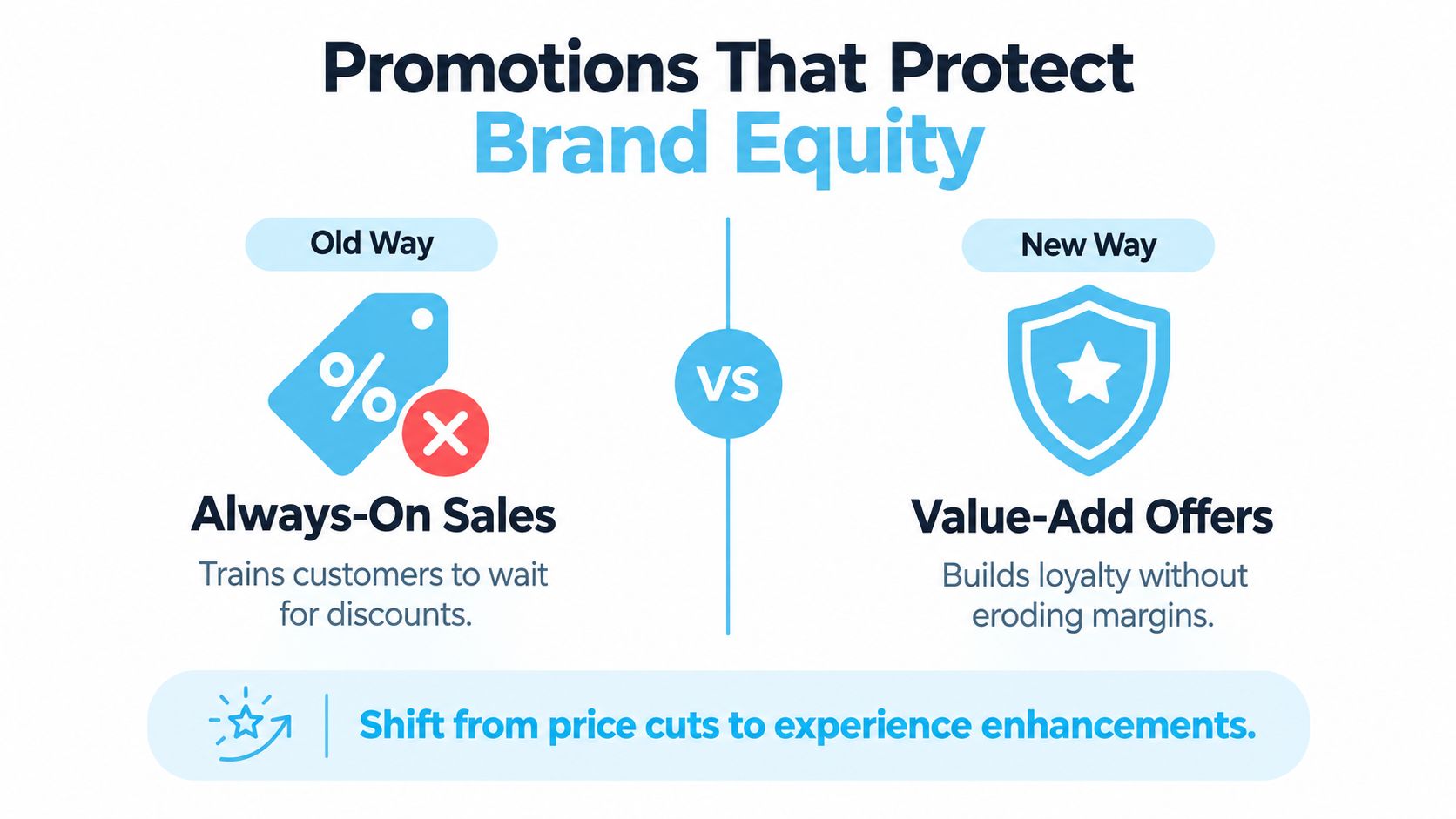
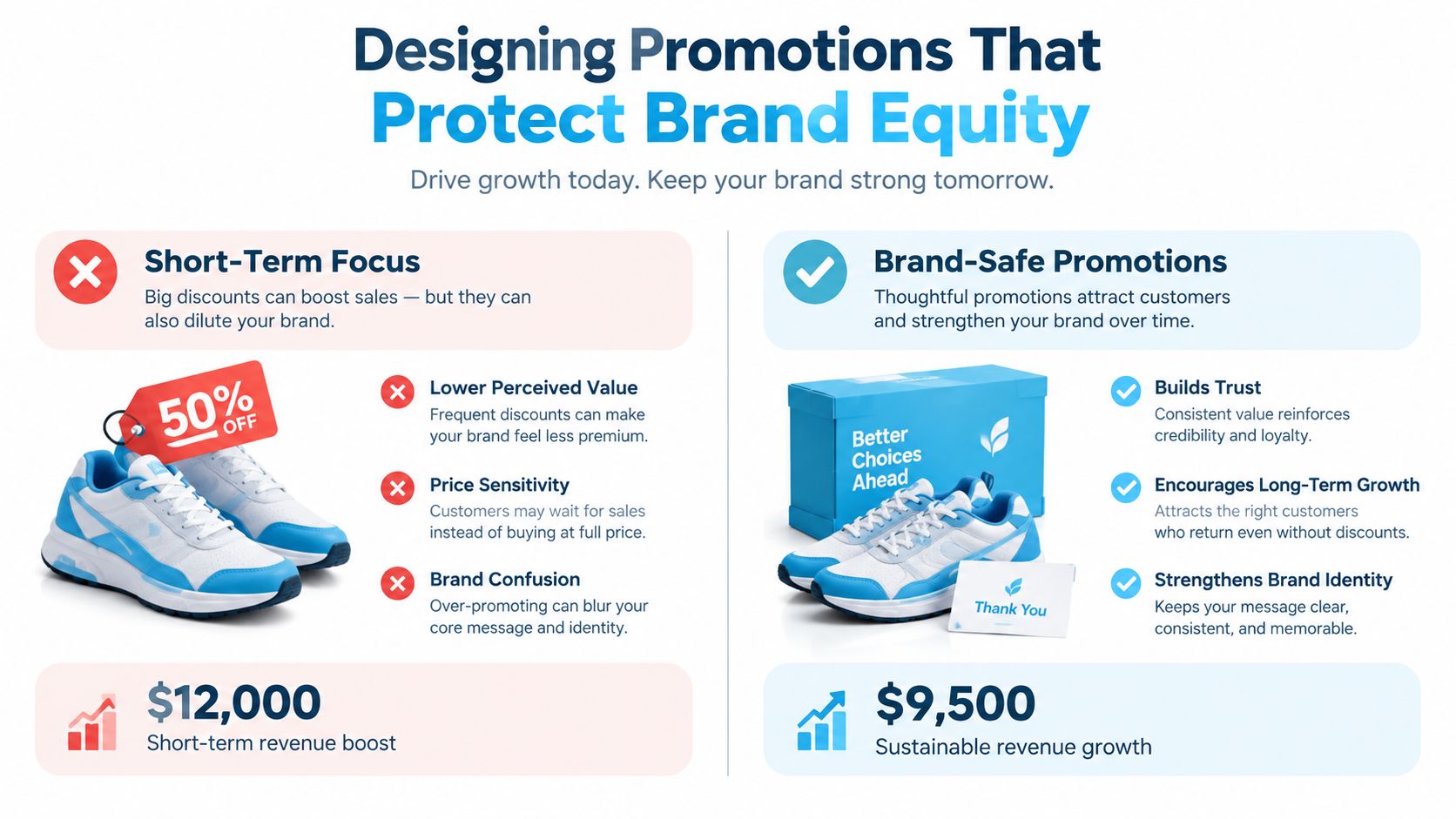
Blanket discounts solve a simple problem by creating another one. They can push a hesitant shopper across the line, but they also reduce the price anchor and teach customers that waiting is rational. If every campaign uses the same code, same percentage, and same broad audience, shoppers don’t need to respond now. They can wait for the next message.
That behavior creates promo fatigue. The brand pays more to generate the same urgency, while customers become increasingly sensitive to price. Digital Commerce 360 reported that 30.1% of surveyed shoppers abandoned carts because shipping made the total higher than expected, and another 30.1% saved a cart for later as a convenience, according to its cart abandonment coverage. A saved cart isn’t always lost demand, but it shows why automatic discounting shouldn’t be the default response to every delay.
Replace waiting with a credible reason to act
Behavior-driven urgency works differently. A time-bound or quantity-bound offer gives the shopper a reason to decide now, while the product’s regular value remains intact for customers who don’t participate. Scarcity bias explains why a credible limit can focus attention. Temporal discounting explains why an immediate reward can feel more valuable than an uncertain future saving.
The guardrail is credibility. A countdown that resets on every visit, or a quantity claim that has no relationship to inventory or offer rules, can reduce trust. Research using a controlled experiment with 480 participants reported increased impulse buying, perceived product value, and purchase intention when scarcity and urgency cues were present, while also finding that effects varied with anxiety, product involvement, and trust. The findings are described in the 2025 study of scarcity and urgency messaging.
A practical promotion can use:
- A real end time: State when the offer closes and keep the rule consistent across channels.
- A real quantity limit: Tie availability to the number of rewards or units the brand can fulfill.
- A participation mechanic: Ask shoppers to act, claim, redeem, or reach a threshold instead of automatically lowering every cart.
- A value-preserving reward: Consider a bundle, service enhancement, early access, or limited incentive before cutting product price.
- A clear margin floor: Set the minimum contribution the offer must generate before launch.
Quikly can support this type of campaign as a Shopify promotion system for time- and quantity-bound rewards, including tiered structures that change as shoppers claim them. Its mechanics have been refined across more than 60 million consumer interactions, and campaigns can be styled as on-brand promotional experiences rather than generic overlays.
The approach still requires judgment. A 2026 study examining four experiments found that social and temporal scarcity cues could increase shoppers’ intention to seek the same product from alternative retailers when the cues reduced credibility or increased inconvenience. The Journal of Consumer Research-related ecommerce scarcity study supports a simple operating rule: urgency should reduce decision friction, not create suspicion.
For Shopify merchants, the smarter question isn’t whether a timer increases clicks. It’s whether the promotion creates incremental action at an acceptable discount cost while preserving trust and future willingness to pay. Alternatives to discounting for Shopify offers a useful direction for teams trying to move from passive markdowns to active promotional experiences.
Building an Omnichannel Experience That Retains Trust
An online store often becomes the control center for a brand that also sells through shops, marketplaces, social channels, events, or retail partners. The customer may discover a product on Instagram, compare it on the Shopify site, purchase through a campaign link, and contact support after delivery. They experience one brand, even when several systems handle the transaction.
That makes centralized product information important. Product names, specifications, sizing, inventory signals, delivery promises, promotional eligibility, and return terms should agree across the customer journey. If the website says an item is available but the fulfillment team can’t ship it, the convenience of ecommerce turns into a trust problem.
Make the promise match the operation
Promotional planning must include the warehouse and delivery process. A short campaign can create concentrated demand, so the team should confirm stock, pick-and-pack capacity, customer service coverage, and the behavior of any inventory reservation logic before launch. A successful promotion that creates late shipments and confusing updates can reduce the value of the next campaign.
Returns deserve the same attention as delivery. Customers often judge the store after the purchase, when they need an exchange, refund, size change, or explanation. A clear policy, accessible status information, and consistent support turn a potential failure into evidence that the brand stands behind the transaction.
DHL’s 2025 consumer survey found that 81% of global consumers would abandon a purchase when their preferred delivery option wasn’t available, demonstrating why logistics belongs in conversion planning, not only post-purchase operations. The finding is documented in the DHL ecommerce trends report.
For Shopify brands, omnichannel maturity doesn’t mean offering every possible option in every market. It means choosing the options the operation can execute reliably, then showing them early enough for customers to make an informed decision. A store that offers fewer delivery methods clearly can earn more trust than one that lists broad coverage but fails to meet its promises.
The benefits of online store infrastructure become durable when the digital experience and physical operation agree. Reach creates opportunity, experimentation improves decisions, and urgency can focus demand. Operational trust determines whether that demand becomes profitable revenue and repeat business.
Quikly helps Shopify brands turn standard promotions into time- and quantity-bound experiences that reward shoppers who act without relying on deeper, always-on discounts. Review how Quikly can connect urgency, promotional participation, and on-brand execution across your storefront, email, and SMS.
Topics: benefits of online store, Shopify growth strategy, ecommerce conversion optimization, DTC margin protection, behavioral promotions