
It might be obvious by now, that if you’re using consumer psychology to its fullest extent, you’re most likely making people feel a gamut of emotions.
Studies show that with the right amount of anticipation comes pleasure — and anxiety is bound to kick in when something is perceived to be scarce.
Additionally, companies use commercials and campaigns to not only educate and entertain, but to tell stories that make consumers feel a specific way about what’s being sold. Once people believe the signals and stories behind a brand, they start using consumption as a form of identity. What people believe about a product or purchase, they then, in turn, believe about themselves.
Marketers are able to utilize these tactics around events and holidays that come with certain feelings already built in. We have a few examples of how companies are filling their brand outreach with all of the emotions:
Valentine’s Day
Ah, yes! The day of love and affection: February 14th. The only way to escape the feelings pushed by marketers and society, at large, for Valentine’s Day’s is to stay home and disconnect from the outside world completely. That, as marketers know, is a highly unlikely scenario for the masses.
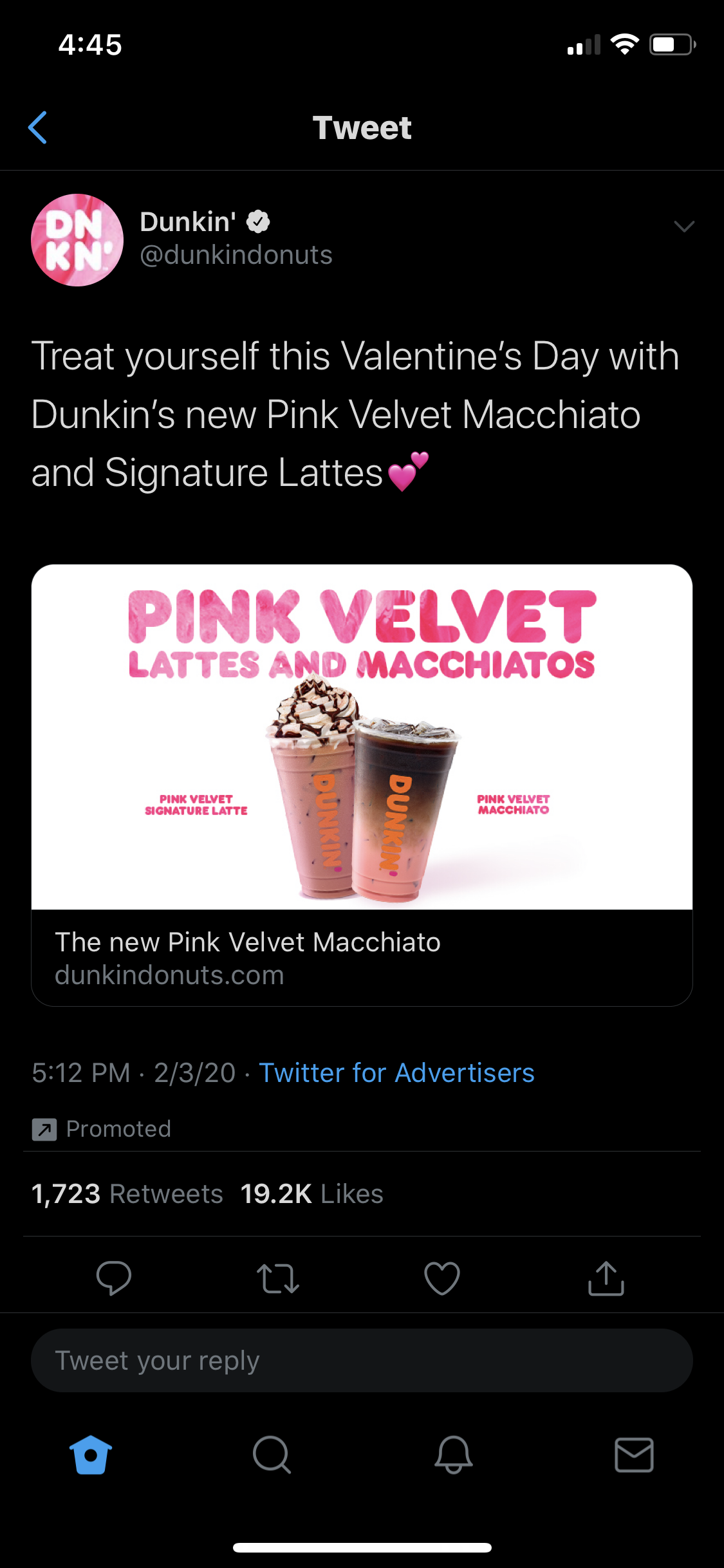
Take this sponsored ad, on Twitter from Dunkin’, for example. While the phrase “treat yourself” is a simple one, implications of the ever-popular self-love, in the form of the brand’s new Pink Velvet Macchiato are being encouraged by the brand to sell their limited-time product.
 Now perhaps the company who has Valentine’s Day best figured out is Victoria’s Secret. Forever making women feel desirable to themselves and others with the marketing around their festive selection.
This chic matching set is Valentine’s Day-approved. Because black can also be red hot: https://t.co/HjHXZ0MFPQ pic.twitter.com/A5pBgJMxUa
— Victoria’s Secret (@VictoriasSecret) January 30, 2020
Other Victoria’s Secret messaging to note: “Cross our hearts: you’ll love new, delicate styles from For Love & Lemons for Victoria’s Secret” and “The heart wants what the heart wants… (with a link to a push-up bra included).”
It’s hard not to love ‘love’.
Super Bowl
With the competitive nature that already exists on Super Bowl Sunday comes an opportunity for marketers to use consumer psychology in the same way. Building off the inherent nature created between rivaling teams can lead to a successful marketing strategy.
A few big brands used contests and sweepstakes to engage consumers in a competitive way around the big game — one of them being Tums.
The company took to Twitter to hold an interactive contest for a chance to win $54,000 or to be one of the six to receive a free trip. All users had to do was share Tumsworthy moments during the game with a specific hashtag.
People could enter up to five times, which included each quarter of the game and the halftime show.
The December Holidays
Christmas, Hanukkah, Kwanza, New Year’s Eve… It can feel like the entire month of December is a celebration. Songs about positivity, good fortune, family and friends are sung throughout the 31 day period. Gatherings with loved ones are had. Holiday cards are sent. All of this is put into marketing strategies.
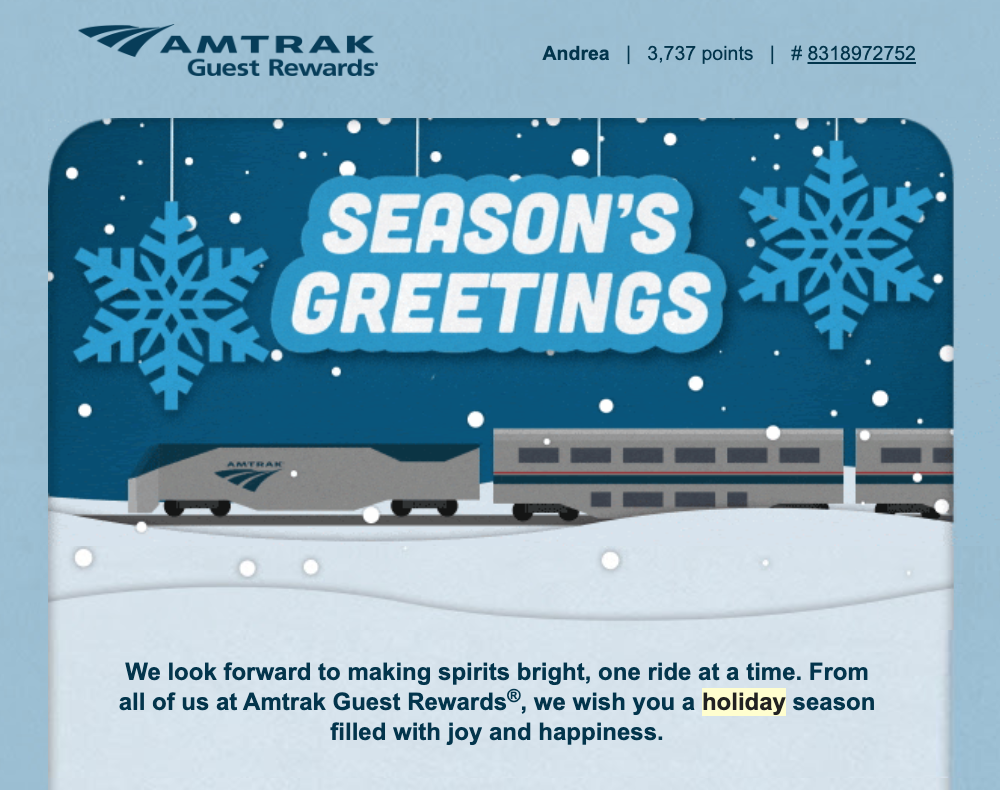
This email sent by Amtrak reads like a holiday card, “making spirits bright, one ride at a time.”
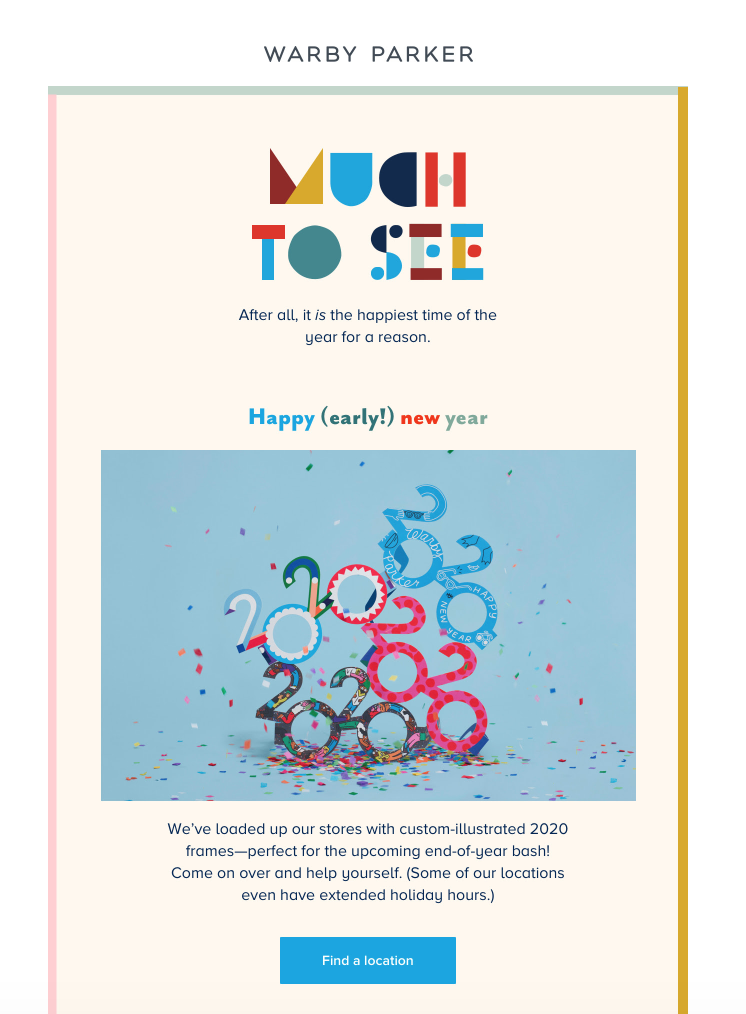
Companies also use this time to project feelings about the actual new year. Warby Parker focused on the happiness 20/20 vision could along with the new decade.
 When there’s a day or moment in a consumer’s life where they might already be feeling something, it can be powerful for companies to play off this in brand outreach.
Topics: Consumer Psychology